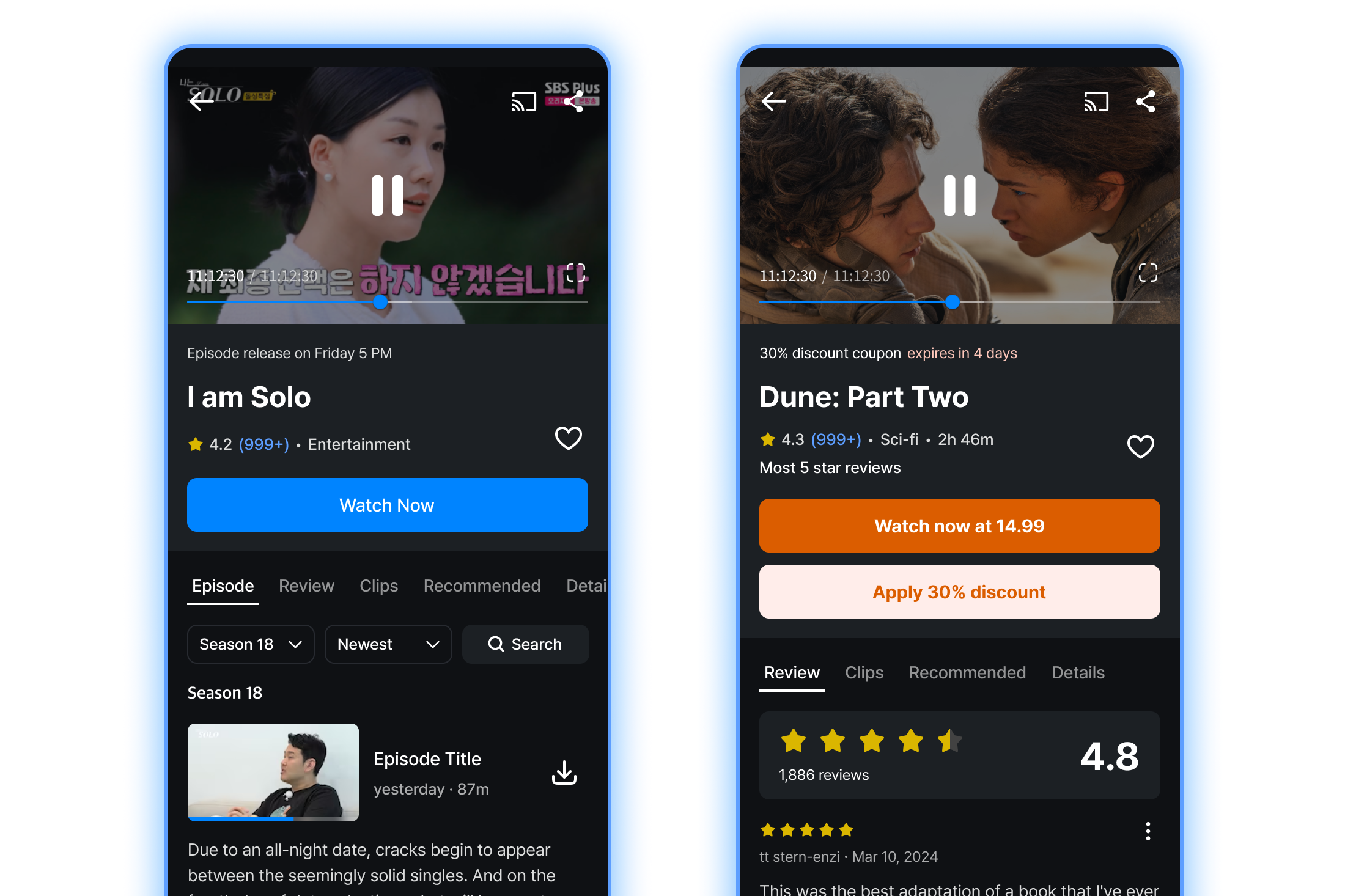
Increase exposure to content information
Role
Product Designer
Contribution
100%
Team
1 Product Owner
1 Product Designer
1 iOS Engineer
1 AOS Engineer
1 Web Engineer
Project Duration
2 Months
Identifying the Opportunity
We found that highly engaged users viewed content detail pages more frequently than less engaged users. This led us to take a closer look at how users interacted with content detail pages throughout their discovery journey.
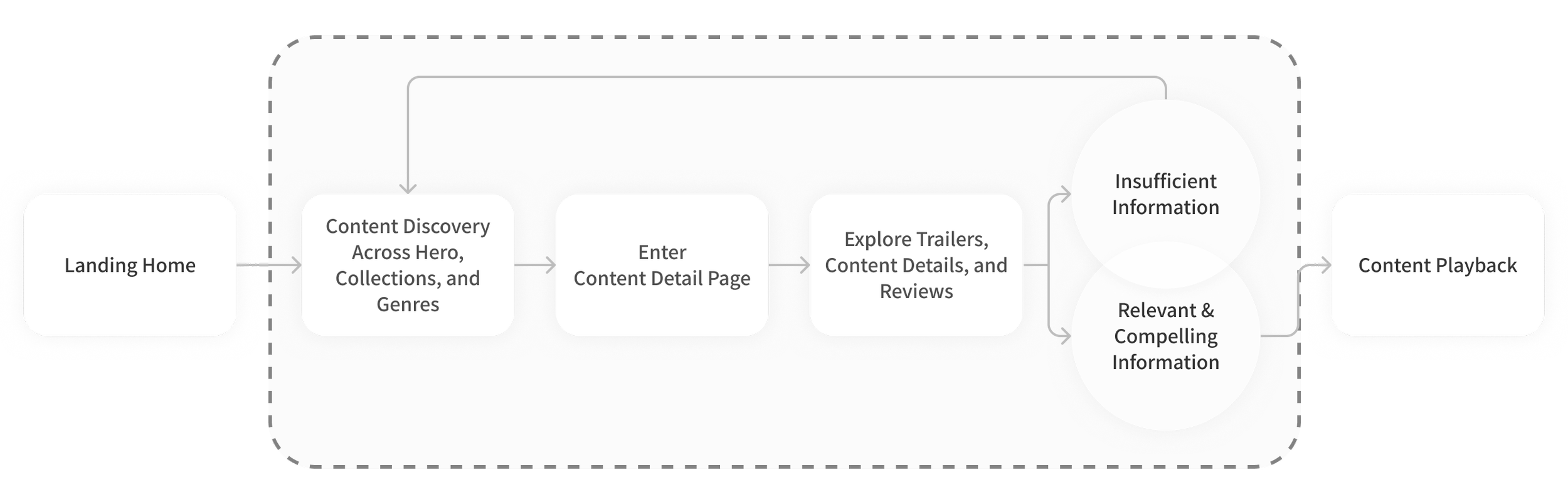
We observed that highly engaged users repeatedly revisited the section highlighted by the dotted line. These repeated interactions gave users more opportunities to explore different content and ultimately increased their chances of finding something they wanted to watch.
This led us to identify the content detail page as a critical touchpoint in the journey from content discovery to viewing.
Problem
However, the existing experience made it unnecessarily difficult for users to access the content detail page. Users had to invest effort before they could determine whether a piece of content was worth exploring.
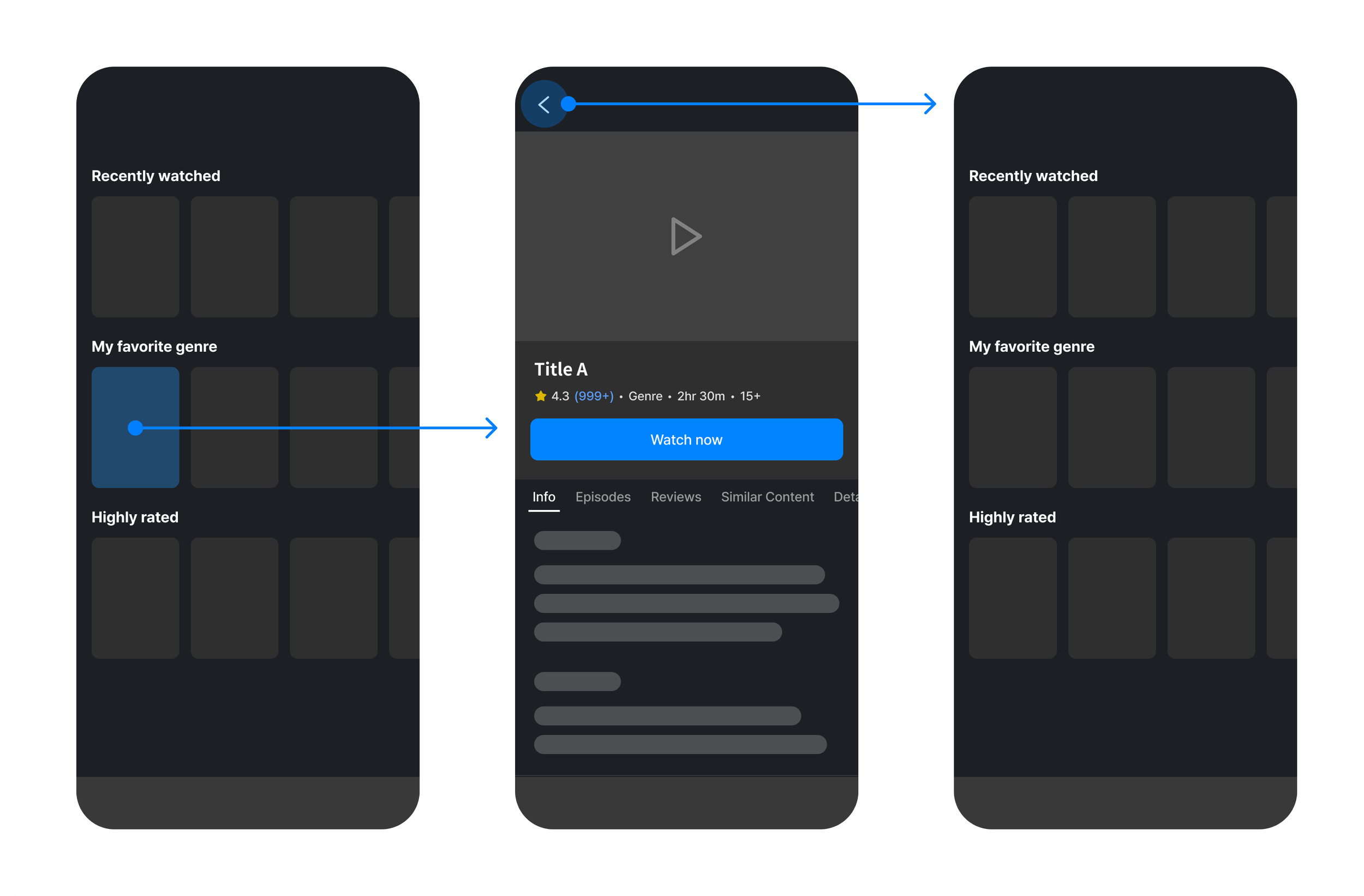
A barrier to exploring content
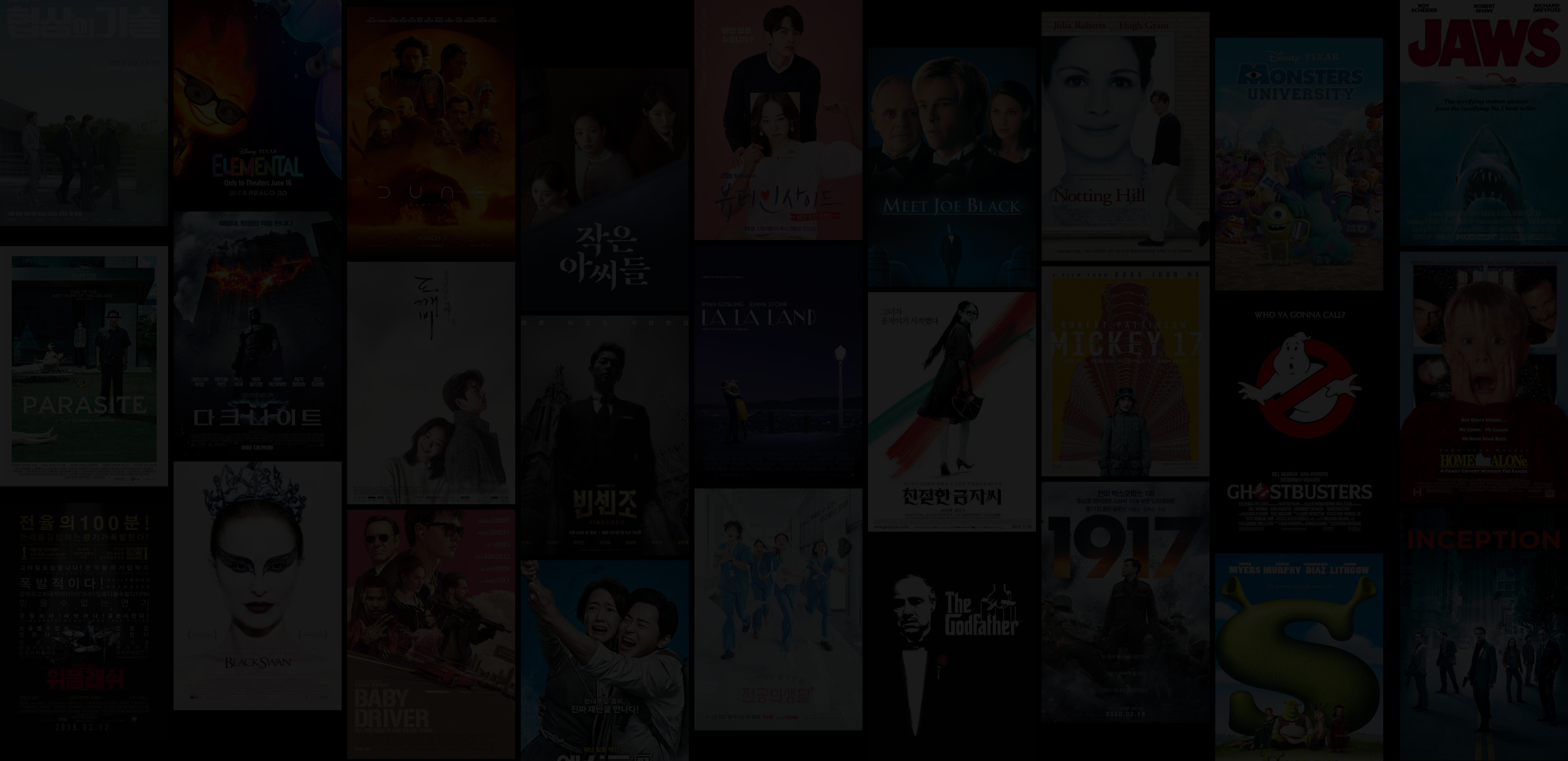
Users had to decide whether to explore a title further based solely on its poster.
Friction in the discovery journey
To learn more, users had to click into the content detail page. If the content didn’t appeal to them, they had to navigate back to the previous page and repeat the process to explore another title.
Hypothesis
We hypothesized that the more users engaged with content details and trailers, the more likely they would be to discover content that matched their preferences—ultimately increasing playback conversion and the number of highly engaged users.
Success Metrics
Simplify the content discovery journey to increase users’ engagement with content details and trailers, with the goal of driving higher playback conversion and increasing the number of highly engaged users.
Strategy Exploration
Once users select a title, we eliminate the need to navigate back to the previous screen. Instead, we use the selected content as a starting point to recommend what they can explore next, while naturally surfacing key information about each title throughout the journey.
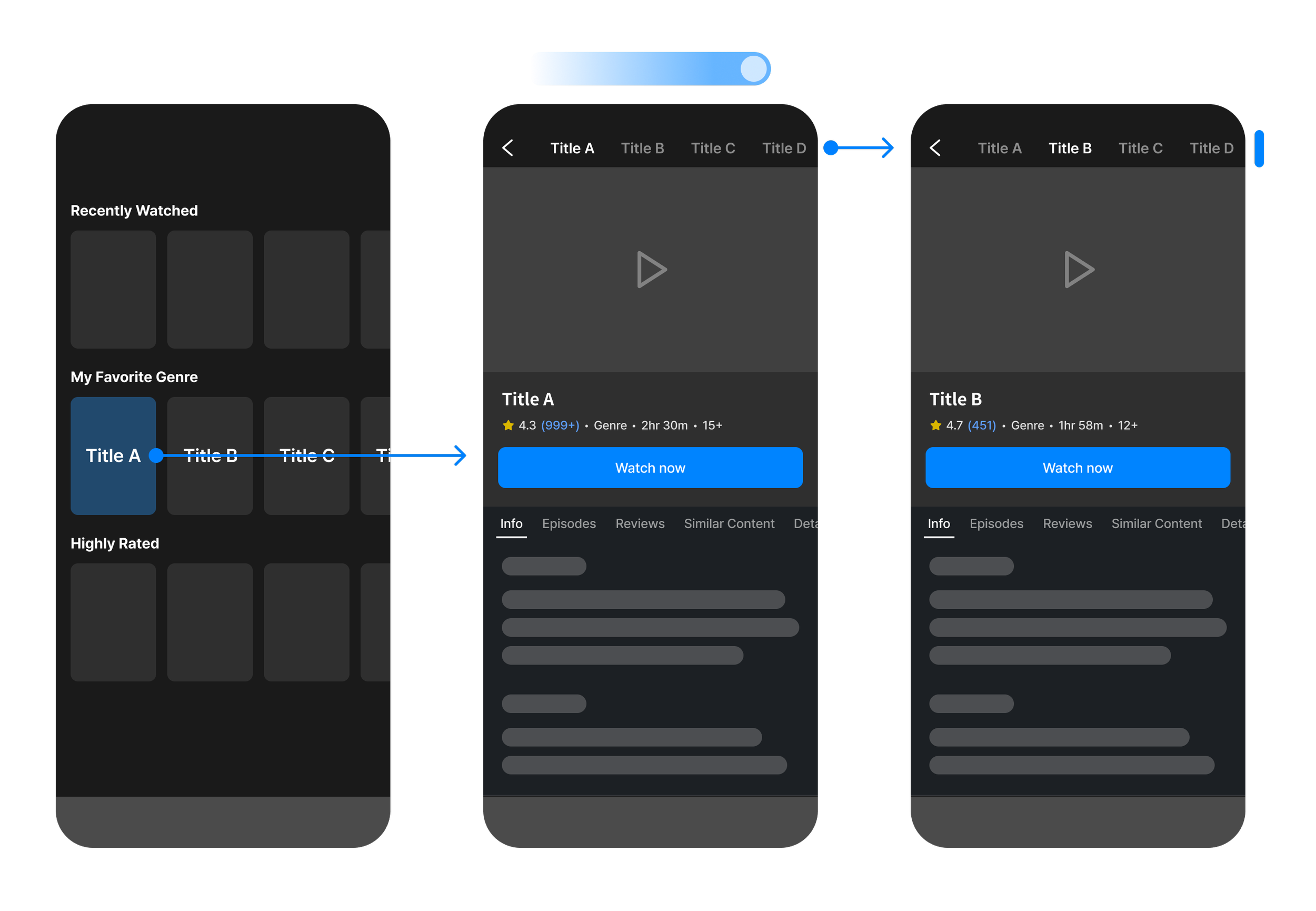
Header Navigation
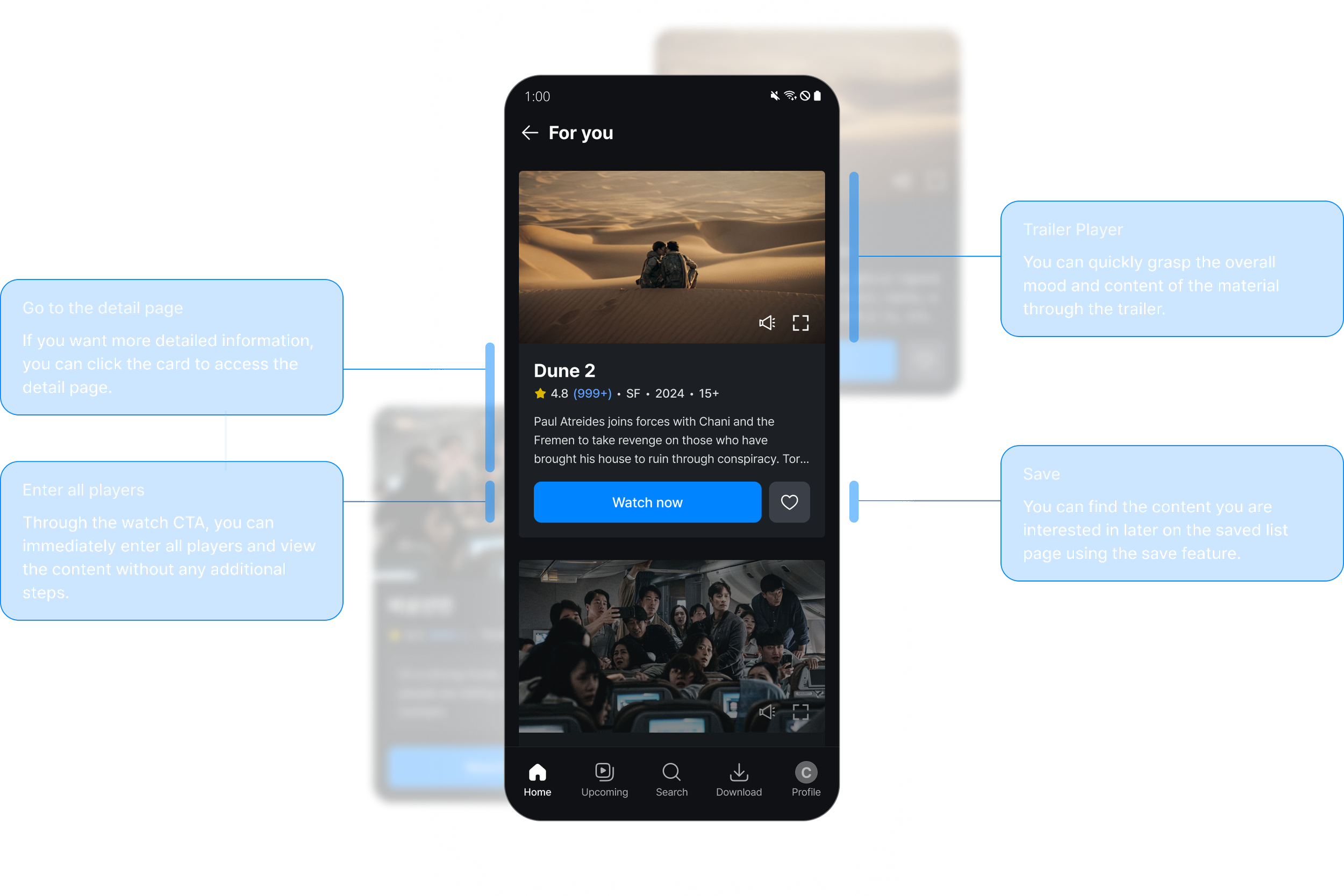
Users can tap the title in the header or swipe horizontally between pages to seamlessly explore trailers and content details across multiple titles.
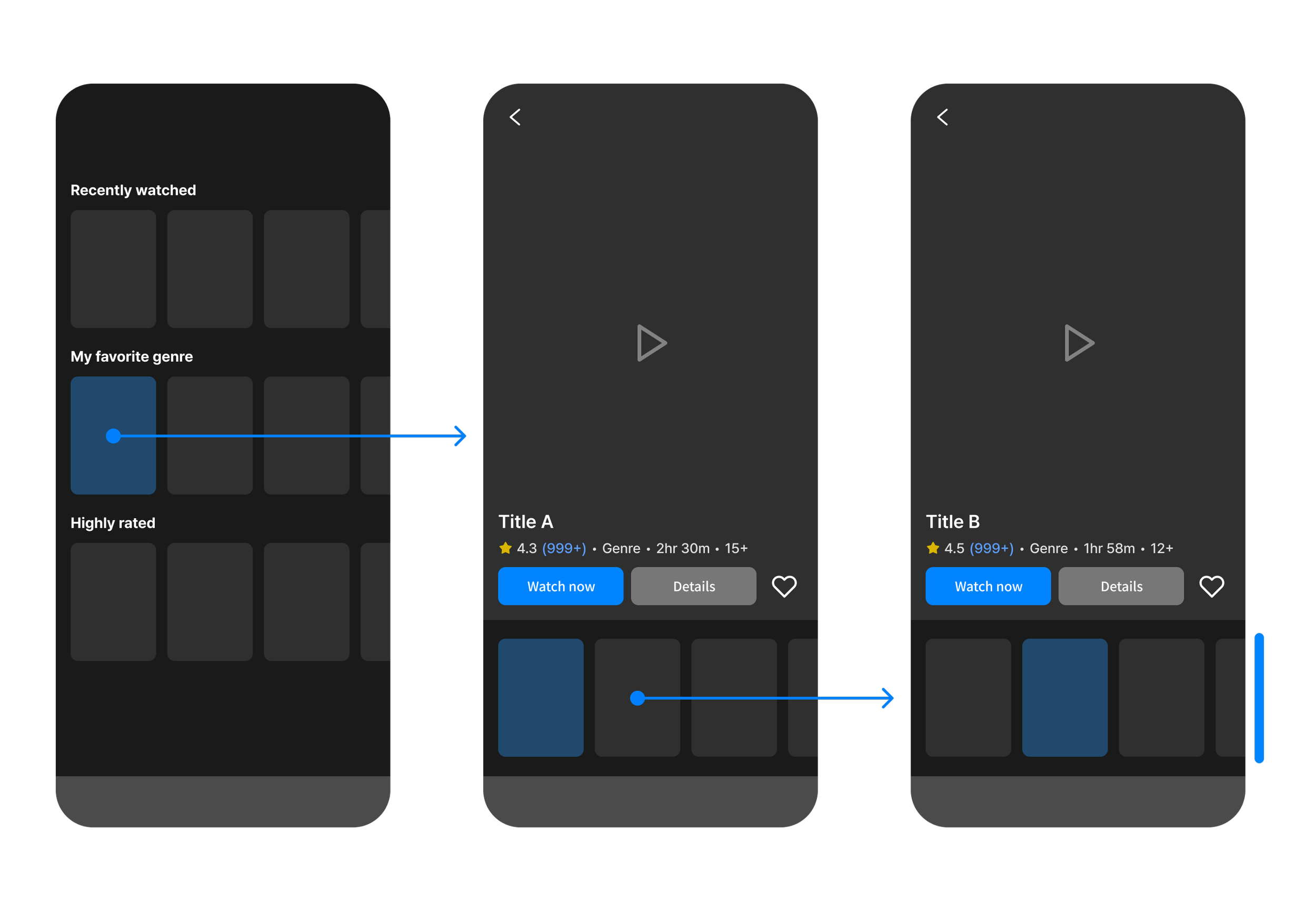
Poster Carousel
Users can horizontally scroll and tap through the poster carousel to seamlessly explore trailers and content details across multiple titles.
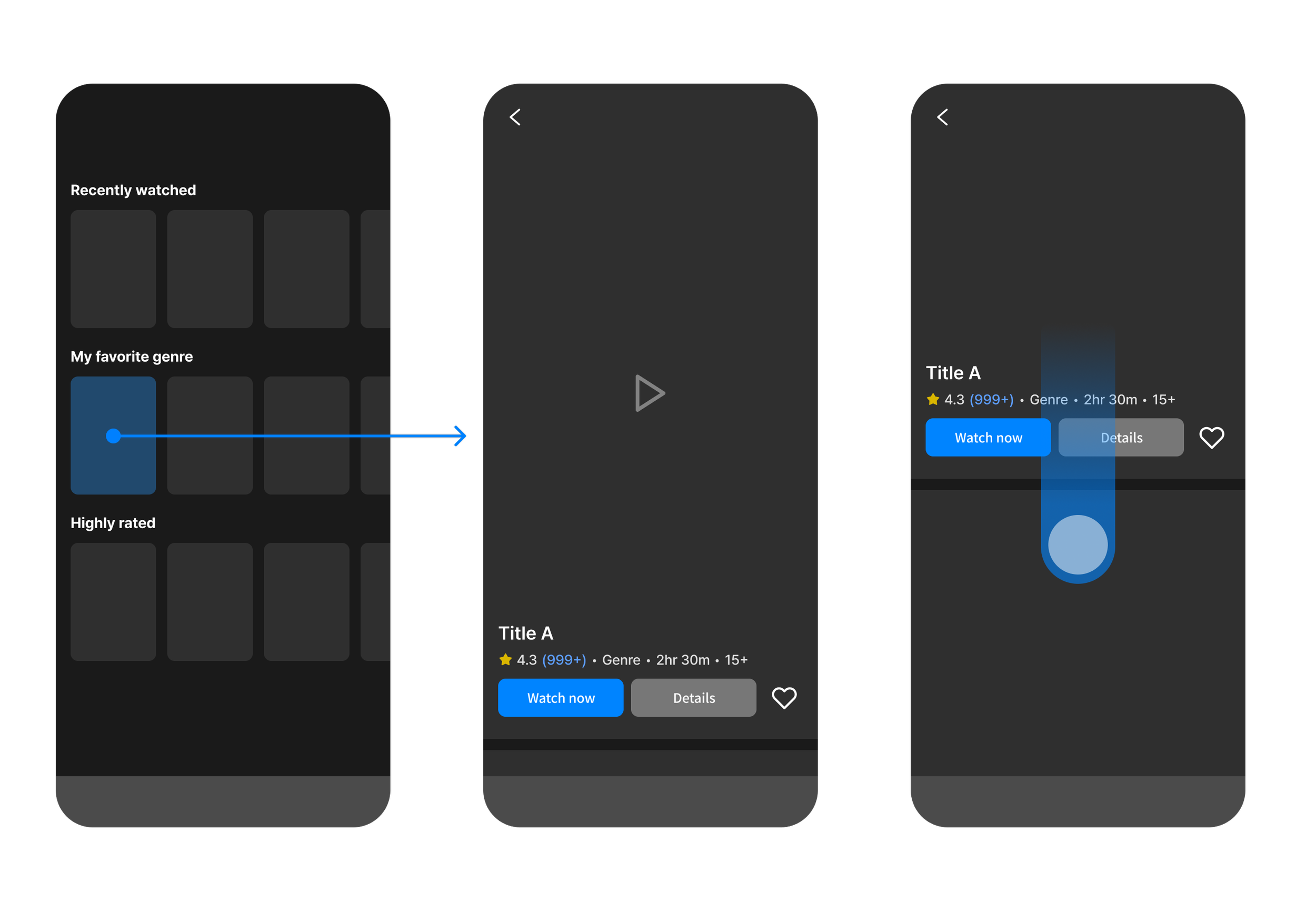
Full-Screen Video
Inspired by the immersive experience of Shorts and Reels, users can vertically scroll through full-screen videos to engage with trailers and continuously explore content details across multiple titles.
After evaluating the three directions, we determined that Full-Screen Video was the most promising approach.
The vertical swipe interaction mirrored familiar content consumption patterns on social media, making it easier to naturally transition users into video viewing. It also created a foundation for future personalization, allowing us to eventually recommend the next title based on users’ viewing history and engagement.
However, at the time, we didn’t have enough content available in a vertical video format, and engineering resources were limited. Rather than requiring additional video production resources, we refined the experience into a card-based format that could leverage our existing landscape videos.
The card format also gave us more flexibility to surface the additional information users identified as important in our survey, without compromising the browsing experience.
Final Design: Mobile
By enabling users to explore trailers and content details across multiple titles through simple vertical swipes, we eliminated the friction of repeatedly entering and leaving content detail pages—and removed the need to judge a title based solely on its poster.
Final Design: Web
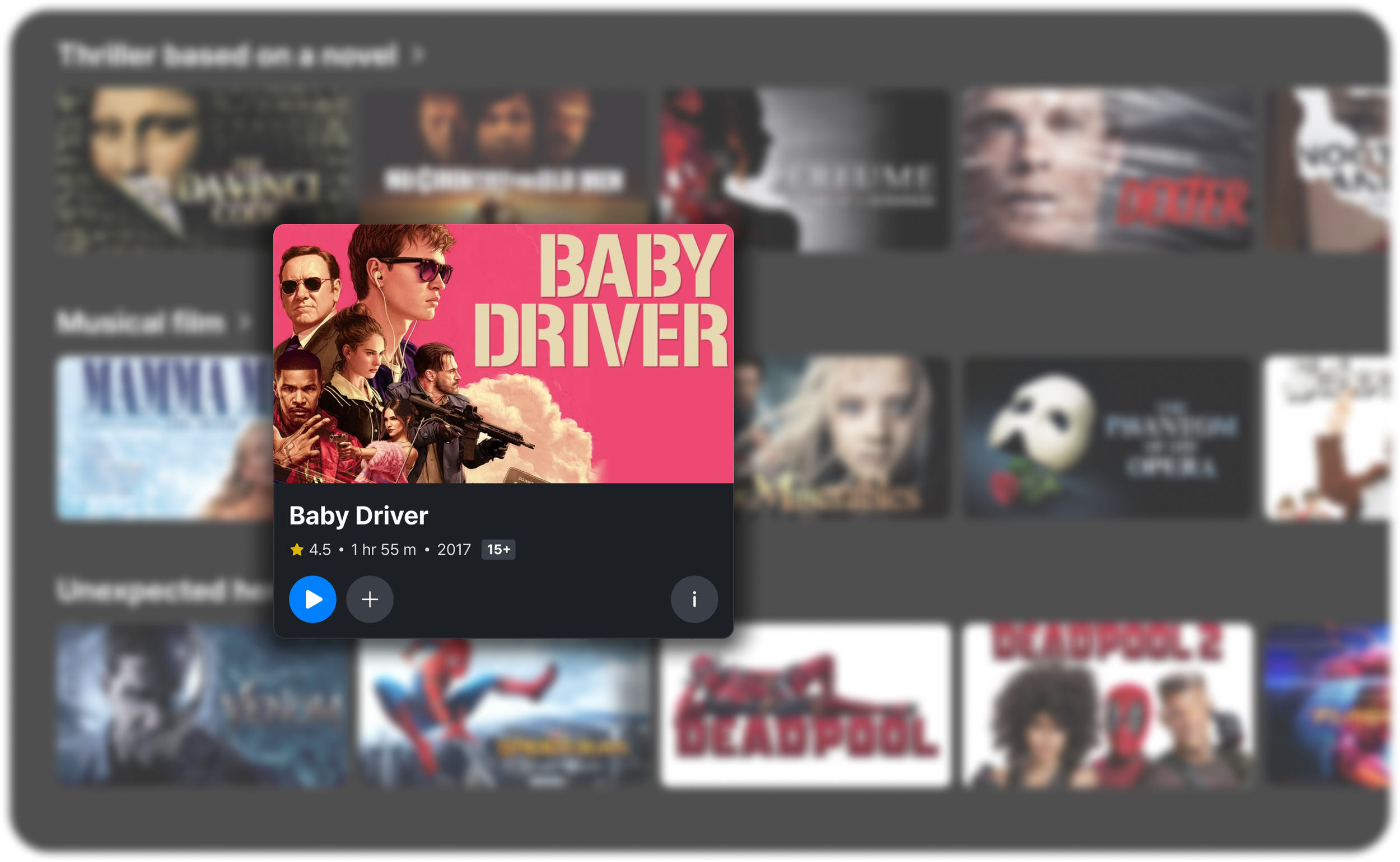
Before
In the existing design, hovering over a poster revealed a card with additional content information and a CTA.
After
In the new design, trailers play directly within the same area, allowing users to experience the tone and atmosphere of a title before deciding whether to watch.
We reused existing landscape video assets and previously developed components, enabling us to implement the new experience with minimal engineering effort.
Impact
Mobile
Total Playbacks: +2% ↑
Playback CTA Click-Through Rate: +6% ↑
Desktop
Total Viewing Time: +3.1% ↑
Playback Clicks: +2.2% ↑
The results demonstrated that simplifying the content discovery experience could meaningfully impact playback metrics across the platform. More importantly, this project reinforced that we can drive meaningful product impact even with limited resources by making thoughtful use of existing assets and components.
Back to preliminary study & research